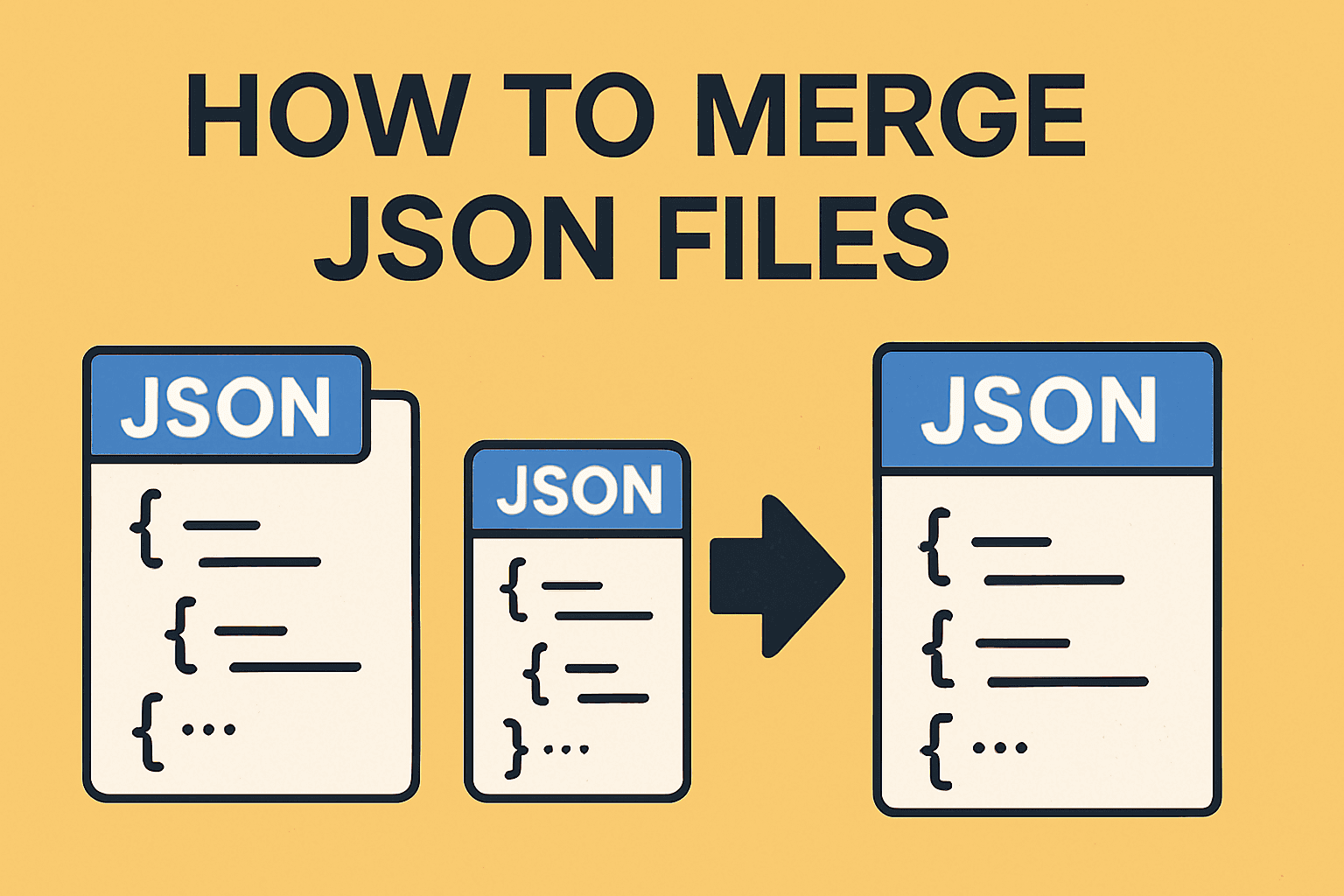
How to Merge JSON Files: Fastest and Easiest Way (2026)
Merge multiple JSON files into one using free online tool, Python, or jq command line. Complete guide with code examples for arrays, objects, nested JSON, and deduplication.
Read guide
Break one XML document (up to 500 MB) into smaller well-formed files by element count, number of chunks, or maximum size. Split on the root's children or any repeating element, keep root attributes and namespaces, preview every result, and download individual XML files or one ZIP.
Split one XML document (up to 500 MB) on the root's children or any repeating element, by element count, number of chunks, or maximum file size.
See the transformation
<?xml version="1.0" encoding="UTF-8"?>
<products>
  <product id="1">
    <name>Laptop Pro</name>
    <price>1299.99</price>
  </product>
  <product id="2">
    <name>Wireless Mouse</name>
    <price>29.99</price>
  </product>
  <!-- ... 5,000 more products -->
</products><!-- chunk_1.xml (1,000 products) -->
<?xml version="1.0" encoding="UTF-8"?>
<products>
<product id="1">...</product>
<product id="2">...</product>
<!-- ... 998 more -->
</products>
<!-- chunk_2.xml through chunk_5.xml -->Four simple steps
Drop your .xml file directly into the splitter interface.
Pick the element to split on, then split by elements per chunk, number of chunks, or max file size.
Tool parses the XML and wraps chunks in the original root (and parent) elements.
Get individual XML files or download all chunks as a ZIP archive.
When to split XML files
Split large XML exports into batch-sized chunks for reliable database imports without transaction timeouts.
Break oversized XML requests into compliant chunks that fit within API gateway size restrictions.
Distribute XML data across multiple workers or threads for faster ETL pipeline throughput.
Cut a huge XML export into files small enough to open in an editor or use as realistic test fixtures.
Common questions answered
Python & Bash examples
import xml.etree.ElementTree as ET

def split_xml(filepath, elements_per_chunk=500):
    tree = ET.parse(filepath)
    root = tree.getroot()
    children = list(root)

    chunk_num = 1
    for i in range(0, len(children), elements_per_chunk):
        chunk_root = ET.Element(root.tag, root.attrib)
        for child in children[i:i + elements_per_chunk]:
            chunk_root.append(child)

        chunk_tree = ET.ElementTree(chunk_root)
        chunk_tree.write(
            f"chunk_{chunk_num}.xml",
            encoding='utf-8',
            xml_declaration=True
        )
        chunk_num += 1

split_xml("products.xml", elements_per_chunk=500)#!/bin/bash
# Split XML using xmlstarlet
INPUT="data.xml"
CHUNK_SIZE=1000
TOTAL=$(xmlstarlet sel -t -v "count(/*/*)" "$INPUT")
CHUNKS=$(( (TOTAL + CHUNK_SIZE - 1) / CHUNK_SIZE ))
for (( i=1; i<=CHUNKS; i++ )); do
START=$(( (i-1) * CHUNK_SIZE + 1 ))
END=$(( i * CHUNK_SIZE ))
xmlstarlet sel -t \
-o '<?xml version="1.0"?>' -n \
-m "/*" -o '<' -v "name()" -o '>' -n \
-m "*[position() >= $START and position() <= $END]" \
-c "." -n -b \
-o '</' -v "name()" -o '>' \
"$INPUT" > "chunk_$i.xml"
doneIn-depth technical walkthrough
XML is not line-based like CSV or JSONL. You cannot just split at line 1000 and get valid XML. The tool splits at the element level. By default it distributes the root element's direct children; you can also pick any repeating element (e.g. <product>, <record>, <item>) from the detected list or type its name, and every match at any depth is distributed instead. Matched elements keep their parent elements: if your <item> records sit inside <channel>, each chunk is wrapped in <channel> too, with the original attributes.
Each output file is a valid, complete XML document with a proper root element wrapping the split elements. If your root element has namespace or schema declarations, they are copied into each output file. Only elements travel into the chunks: comments, a DOCTYPE, processing instructions, and any text or elements outside the split elements are dropped. The XML declaration is kept, with its encoding set to UTF-8 because chunks are written as UTF-8.
Example: a products.xml with 50,000 <product> elements split into 10 files of 5,000 <product> elements each. Each file has <products> as the root element, with the same attributes and namespace declarations as the original.
The tool parses the XML structure using the browser's DOM parser (files up to 500 MB, memory permitting), collects the root's child elements or every element you chose to split on, and writes chunks to separate files. Each chunk includes the XML declaration (<?xml version="1.0" encoding="UTF-8"?>) and the root element wrapper.
This is different from text-based splitting which would break in the middle of an element and produce invalid XML. Structural splitting ensures every output file can be parsed by any XML tool or library.
Database imports: many database tools have row limits per import operation. A 100,000-row XML export might need to be split into 10 files of 10,000 rows each to avoid transaction timeouts or memory errors during import.
XSLT processing: large XML files can cause memory issues in XSLT transforms. If your XSLT processor crashes or runs out of memory on a 500MB XML file, split it first into 50MB chunks and transform each separately.
API payloads: some APIs have a payload size limit and expect batched XML. For example, if an API has a 10MB limit and your XML export is 80MB, split it into 8 files and submit them sequentially or in parallel.
Testing and inspection: a 300MB export is hard to open in an editor. Splitting it into chunks of a few thousand records gives you files you can open, search, and use as realistic test fixtures. Do not split files whose format requires a single document, such as a Maven pom.xml: the pieces would no longer be usable configuration.
For automated or recurring splitting, Python's ElementTree or lxml library handles this in about 10 lines. Parse the root, collect child elements, write chunks to separate files. Each chunk gets the root element wrapper and XML declaration.
Example concept: tree = ET.parse("file.xml"), root = tree.getroot(), children = list(root), then loop over children in chunks and write each chunk with ET.ElementTree(chunk_root).write().
For Linux/Mac: xmllint can validate each output chunk after splitting. Run xmllint --noout chunk_1.xml to check for errors. If it exits with code 0, the XML is valid. Use this in a shell script to verify all chunks after splitting.
Hand-picked guides to go deeper
Merge multiple JSON files into one using free online tool, Python, or jq command line. Complete guide with code examples for arrays, objects, nested JSON, and deduplication.
Format JSON in Notepad++ with the JSTool plugin. Includes setup, shortcuts, validation, minification, troubleshooting, and formatting tips.
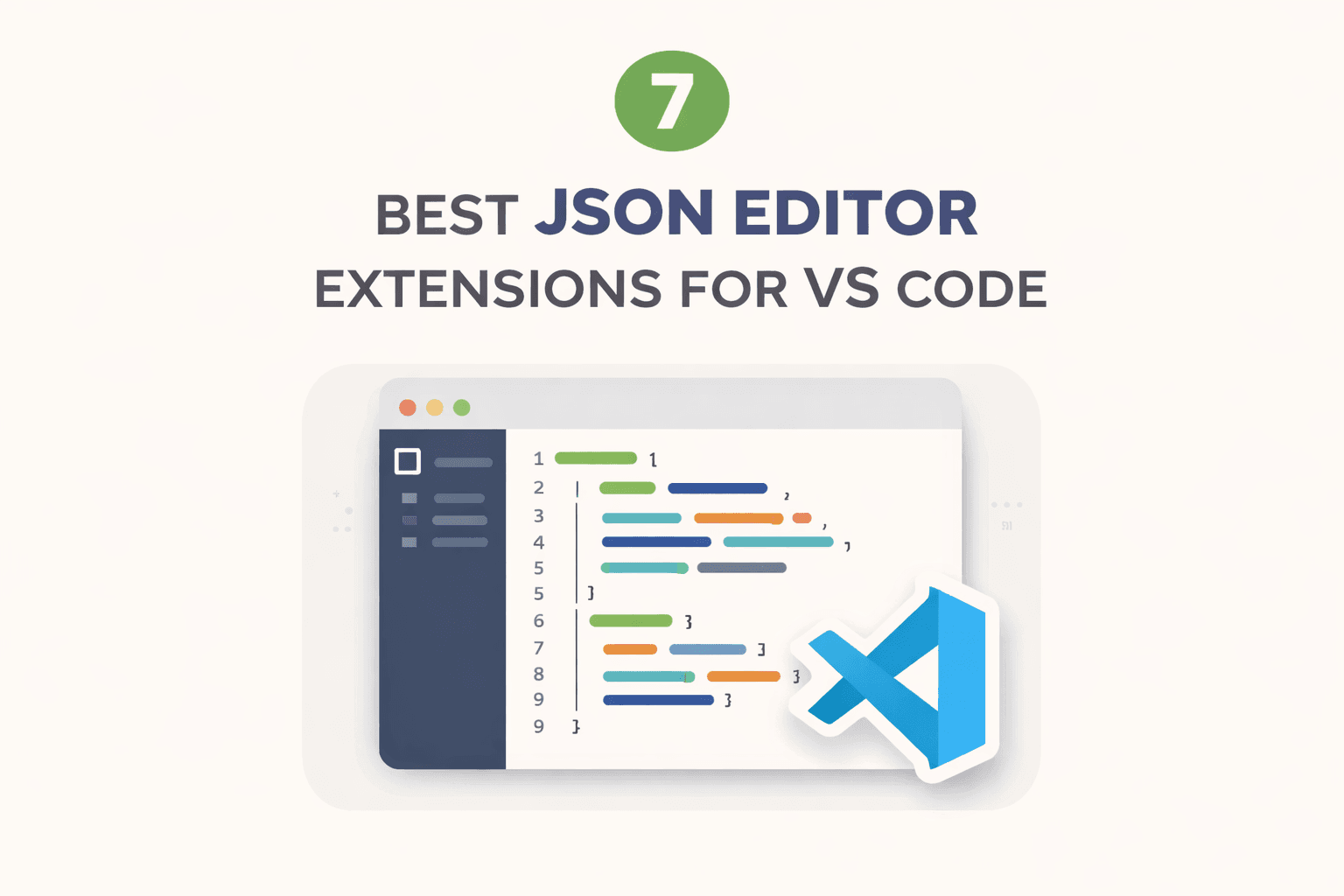
Enhance VS Code JSON editing with 7 useful extensions for formatting, minification, visual exploration, inline diagnostics, conversion, and repair.