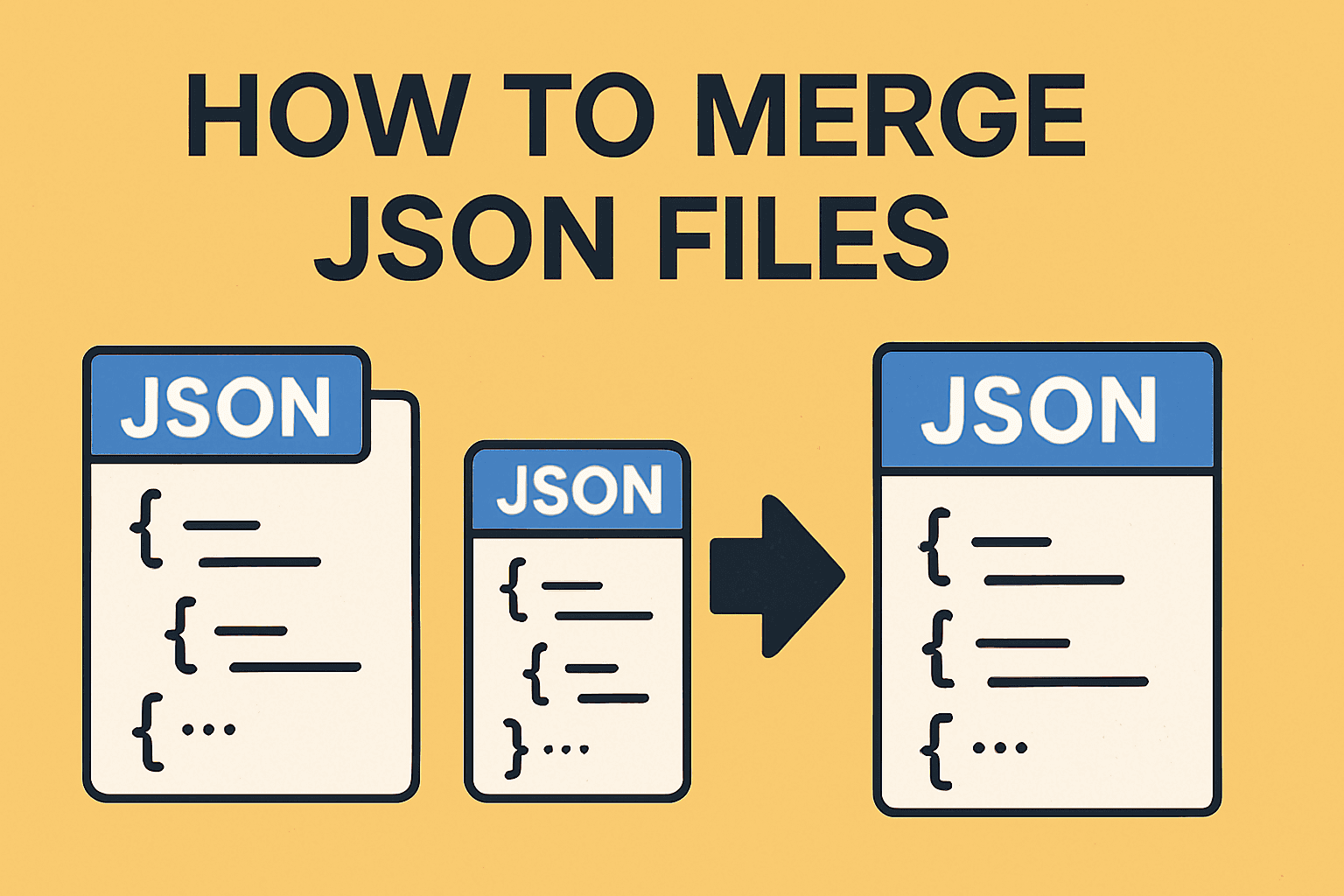
How to Merge JSON Files: Fastest and Easiest Way (2026)
Merge multiple JSON files into one using free online tool, Python, or jq command line. Complete guide with code examples for arrays, objects, nested JSON, and deduplication.
Read guide
This tool combines multiple YAML files into one. Used by DevOps engineers and developers working with Kubernetes configs, Docker Compose files, GitHub Actions workflows, and Ansible playbooks. Runs entirely in your browser, free.
Drop YAML files or click to browse
Merge multiple YAML files
YAML merge in action
# config-dev.yaml
environment: development
database:
  host: localhost
  port: 5432

# config-prod.yaml
environment: production
database:
  host: prod-db.example.com
port: 5432merged:
# From config-dev.yaml
- environment: development
database:
host: localhost
port: 5432
# From config-prod.yaml
- environment: production
database:
host: prod-db.example.com
port: 5432Four simple steps
Drop multiple .yaml or .yml files directly into the merger interface.
Pick Array, Deep Merge, Object with Keys, or Separate Documents.
Valid files are parsed and combined; files with syntax errors are flagged and skipped.
Get merged YAML file ready for deployment or configuration.
Real-world scenarios
Combine base configuration with environment-specific overrides for dev, staging, and production deployments.
Consolidate multiple resource definitions into single files for easier kubectl apply and atomic deployments.
Merge pipeline configuration fragments for different stages, environments, or teams into complete workflows.
Combine service definitions from multiple compose files into comprehensive stack configurations.
Common questions
Python & Bash
import yaml

def merge_yaml_files(files, strategy="array", root_key="merged"):
    merged_data = []

    for filepath in files:
        with open(filepath, 'r') as f:
            data = yaml.safe_load(f)
            merged_data.append(data)

    if strategy == "array":
        output = {root_key: merged_data}
    elif strategy == "object":
        output = {root_key: {}}
        for i, filepath in enumerate(files):
            key = filepath.replace('.yaml', '').replace('.yml', '')
            output[root_key][key] = merged_data[i]
    else:  # document
        output = merged_data

    with open("merged.yaml", 'w') as f:
        if strategy == "document":
            yaml.dump_all(output, f, default_flow_style=False)
        else:
            yaml.dump(output, f, default_flow_style=False)

    print(f"Merged {len(files)} YAML files")

files = ["config-dev.yaml", "config-prod.yaml"]
merge_yaml_files(files, strategy="object", root_key="environments")#!/bin/bash
# Merge YAML files with document separators
OUTPUT="merged.yaml"
# Clear output file
> "$OUTPUT"
# Merge all YAML files
for file in configs/*.yaml; do
if [ -f "$file" ]; then
echo "# From $file" >> "$OUTPUT"
cat "$file" >> "$OUTPUT"
echo "---" >> "$OUTPUT"
fi
done
# Remove trailing separator
sed -i '$ d' "$OUTPUT"
echo "Merged YAML files into $OUTPUT"In-depth walkthrough
Shallow merge: top-level keys from all files are combined. If two files have the same top-level key, the last file's value wins and overwrites the first. Example: file1 has database: postgres and file2 has database: mysql. Shallow merge gives you database: mysql.
Deep merge: nested keys are merged recursively. If both files have a services key with different sub-keys, deep merge combines them instead of overwriting. This tool's Deep Merge strategy does exactly that: mappings are merged recursively, the later file wins for the same scalar key, and lists are replaced by default (you can switch to concatenating them).
Use Deep Merge for config files that share keys like services, volumes, or env. Use Array of Documents, Object with Keys, or Separate Documents when every file should stay intact as its own item, section, or document.
Before shallow merge: file1 port: 3000, file2 port: 8080. After: port: 8080. Before deep merge: file1 config: {timeout: 30}, file2 config: {retries: 3}. After: config: {timeout: 30, retries: 3}.
Order matters for deep merge: upload (or reorder) files so the base comes first and overrides come last. Deep Merge works on parsed data, so comments from the source files are not carried over and anchors are expanded into plain values.
Kubernetes: merging base config with environment-specific overlays is common for multi-environment deployments. For deployable overlays, use Kubernetes-native tools such as Kustomize or a YAML-aware merge tool. Use this browser merger for combining manifests into one multi-document file for review, then validate with kubectl apply --dry-run.
Docker Compose: merging a base docker-compose.yml with a docker-compose.override.yml is standard practice. Docker does this natively with the -f flag (docker-compose -f base.yml -f override.yml up), and Deep Merge in this tool gives a similar single-file preview. Compose has a few special rules (for example, some lists such as ports are combined rather than replaced), so confirm the result with docker compose config.
GitHub Actions: combining reusable workflow fragments lets you build complex workflows from smaller pieces. YAML anchors and aliases may need manual cleanup after merging because they do not work across separate files. Convert anchors to explicit values or use GitHub's reusable workflows feature instead.
Ansible: merging variable files from different environments (dev, staging, prod) creates a single vars file for playbook execution. Deep Merge with the base file first lets environment-specific values override base values while keeping keys the override file does not mention.
For all these workflows, test the merged output with the target tool before deploying. Run kubectl apply --dry-run, docker-compose config, or ansible-playbook --syntax-check to catch merge errors early.
Indentation errors are the most common problem. YAML uses spaces, not tabs. Tabs will break the parser with cryptic errors like "mapping values are not allowed here". Set your editor to convert tabs to spaces and use consistent indentation (2 or 4 spaces, not mixed).
Duplicate keys in the same file are not allowed in strict YAML. If you have two name: keys at the same level, the parser will reject it or silently use the last value. Check for duplicates before merging. Some parsers allow duplicates but this is non-standard behavior.
Some special characters in values need quoting. A colon followed by a space, a value starting with [, {, *, & or #, and leading/trailing spaces all require quotes. A colon without a following space is fine: url: http://example.com parses as a plain string, but title: Note: read me must be written title: "Note: read me".
This tool parses every file you add and flags syntax errors, tab indentation, and duplicate keys with the line number; flagged files are skipped when merging. For style rules (line length, key ordering) use yamllint or Red Hat's YAML extension for VS Code.
Hand-picked guides to go deeper
Merge multiple JSON files into one using free online tool, Python, or jq command line. Complete guide with code examples for arrays, objects, nested JSON, and deduplication.

Format JSON in Notepad++ with the JSTool plugin. Includes setup, shortcuts, validation, minification, troubleshooting, and formatting tips.

Enhance VS Code JSON editing with 7 useful extensions for formatting, minification, visual exploration, inline diagnostics, conversion, and repair.